
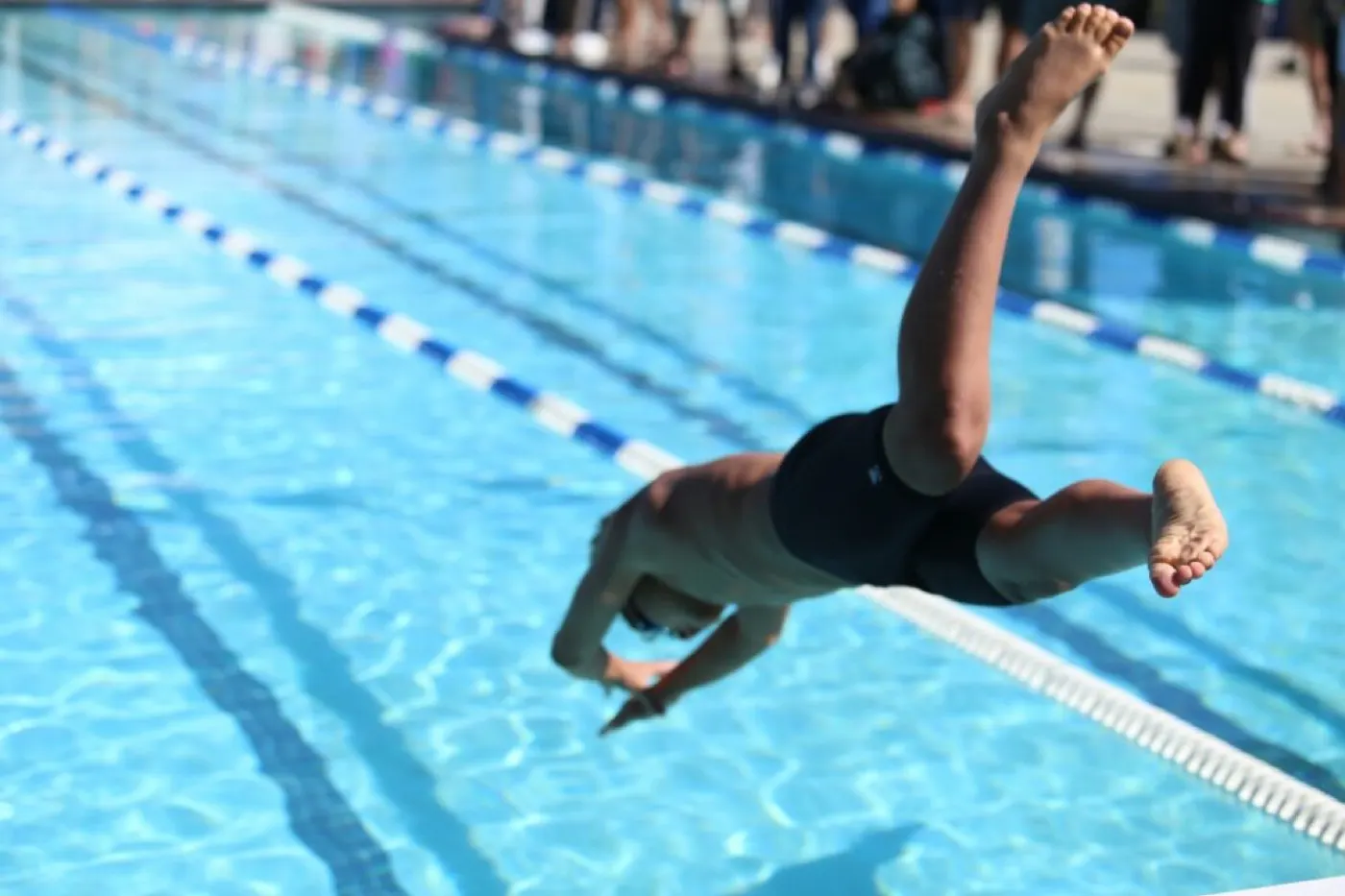
Many have heard of the term swimmer’s shoulder or “Swimmers shoulder” – but what exactly is it, and what can you do to make it better?
What is swimmer’s shoulder?
Swimmer’s shoulder simply means “pain in the shoulder when you swim”. In other words, it is an umbrella term. Most often it is due to rotator cuff-related shoulder pain. Feel free to read our articles on the rotator cuff and rotator cuff-related shoulder pain.
Why does swimmer’s shoulder occur?
Swimming strokes require large movements of the shoulders, and force production when the shoulder is in a position of combined elevation and internal rotation. This is by no means a dangerous position that you should avoid – but if you swim thousands of strokes a week, great demands are placed on stabilising muscles such as the rotator cuff, and other muscles around the shoulder blade. Over time this can lead to an overload of the tendon tissue connected to the rotator cuff muscles. Those who struggle with swimmer’s shoulder tend to have lower muscular endurance. It is therefore conceivable that an important part of treatment and prevention is to strengthen this.
Treatment of swimmer’s shoulder
It is important that the treatment plan is tailored to the individual. This is done on the basis of a comprehensive examination, including clinical tests, as well as mapping of factors such as training volume and sleep. An ultrasound examination can also be added if needed. The following measures are often central in treatment:
- Load management: Activity modification and temporary reduction of painful activity, followed by gradual build-up.
- Guided rehabilitation: Performing exercises to rehabilitate the tendon tissue connected to the rotator cuff, as well as strengthening other muscles around the shoulder blade.
- Recovery measures can help prevent overuse injuries such as swimmer’s shoulder, but will also be central in a rehabilitation phase. In addition, they can improve performance in the pool – read more about recovery measures here.
- Shockwave therapy may be appropriate if the condition has lasted for a longer time without improvement, but then in combination with training and exercises.
Our practitioners have good experience with diagnosing and treating shoulder problems. Olav Barøy at Løren has particular expertise in swimming injuries after several years as an active swimmer and head coach in a swimming club.
References
- Davis, D. D., Nickerson, M., & Varacallo, M. (2023). Swimmer’s Shoulder. In StatPearls. StatPearls Publishing.
- McKenzie, A., Larequi, S. A., Hams, A., Headrick, J., Whiteley, R., & Duhig, S. (2023). Shoulder pain and injury risk factors in competitive swimmers: A systematic review. Scandinavian journal of medicine & science in sports, 33 (12), 2396–2412. https://doi.org/10.1111/sms.14454
- Struyf, F., Tate, A., Kuppens, K., Feijen, S., & Michener, L. A. (2017). Musculoskeletal dysfunctions associated with swimmers’ shoulder. British journal of sports medicine, 51 (10), 775–780. https://doi.org/10.1136/bjsports-2016-096847
- Tovin B. J. (2006). Prevention and Treatment of Swimmer’s Shoulder. North American journal of sports physical therapy: NAJSPT, 1 (4), 166–175.
- Welbeck, A. N., Amilo, N. R., Le, D. T., Killelea, C. M., Kirsch, A. N., Zarzour, R. H., Burgi, C. R., Sell, T. C., & Faherty, M. S. (2019). Examining the link between thoracic rotation and scapular dyskinesis and shoulder pain amongst college swimmers. Physical therapy in sport: official journal of the Association of Chartered Physiotherapists in Sports Medicine, 40, 78–84. https://doi.org/10.1016/j.ptsp.2019.08.013