
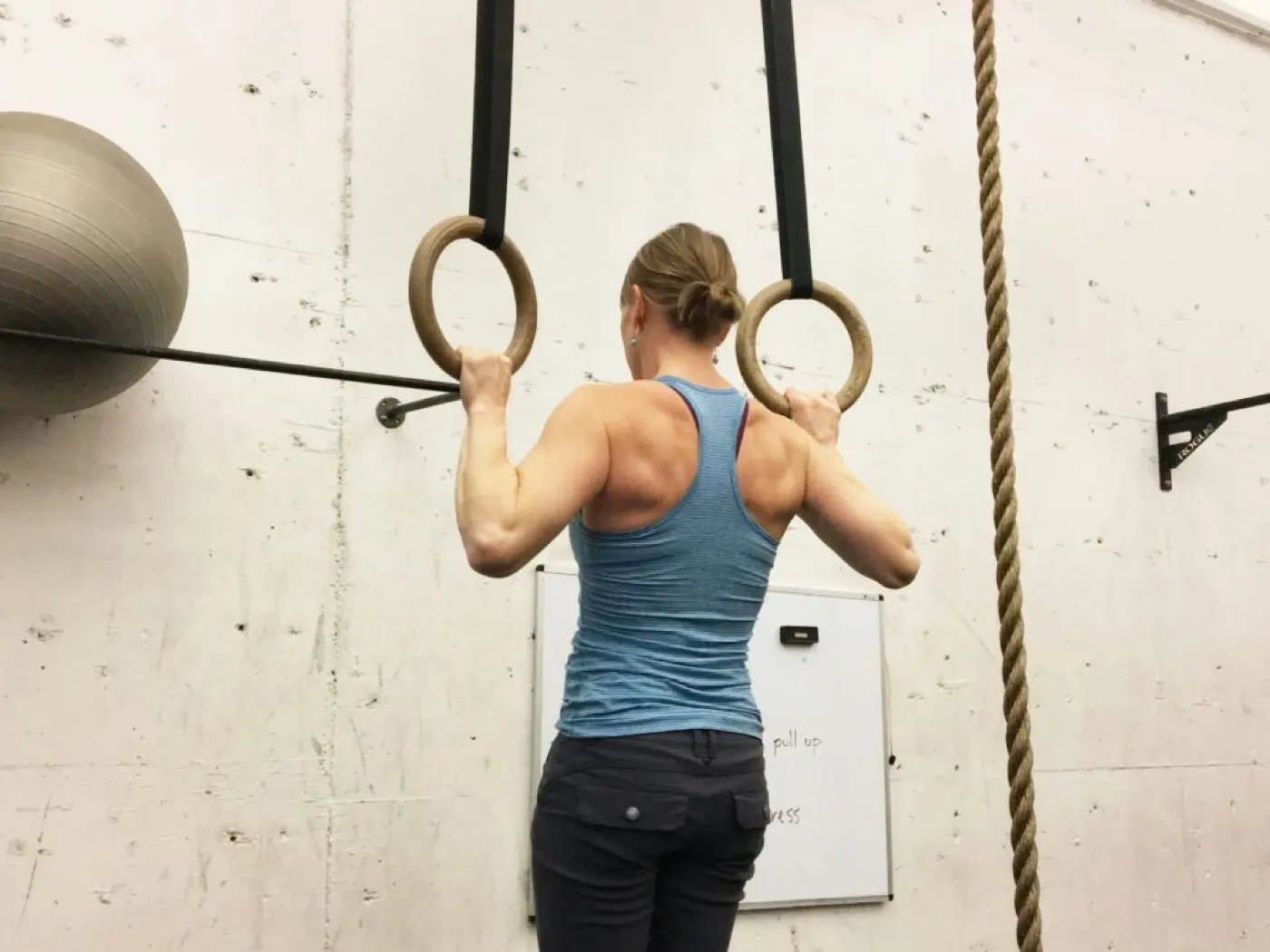
One of the more common causes is pain from the tendon tissue of the rotator cuff muscles, and this is called rotator cuff related shoulder pain. The condition goes under the umbrella term subacromial shoulder pain, but the terms are used interchangeably. The condition becomes more common with age, and risk factors can be age over 50, diabetes and working with the arm above shoulder height.
What exactly is rotator cuff related shoulder pain?
Rotator cuff related shoulder pain is pain related to the tendon tissue of the rotator cuff muscles. Overload of tendons over time can lead to the development of what is called tendinopathy. It was previously called tendinitis, even though there is no inflammation in the tendon. Furthermore, so-called partial tears can occur in the tendon tissue, and sometimes also full-thickness tears, which means that part of the tendon is completely torn. This is more common after trauma, for example after a fall on an outstretched arm. The term subacromial impingement syndrome was previously used a lot, as it was thought that narrow spaces in the shoulder led to wear and damage to these tendons. We now know that this is not correct.
Could I have rotator cuff related shoulder pain?
The condition is characterised by pain that often comes on gradually over time. In some cases it can feel as if the condition comes on more acutely, for example after an intensive period of unaccustomed activity. Pain will be provoked when demands are placed on the muscle that the irritated tendon is connected to. This often means pain when lifting the arm above shoulder height and when rotating the upper arm inwards and outwards. The pain can be at the front, top or back of the shoulder, and it is common to have some pain down the outside of the upper arm. Night pain is not unusual, especially if you lie on the sore shoulder. Otherwise, it is most typical to have pain during activity and movement rather than when you are completely at rest.
How long does the condition last?
For some people the condition can take a long time to get rid of; in a study from 2011, 70% of participants still had problems after six weeks and 40% still had problems after one year. Other data suggest that the condition can often last between 3-6 months for many people. Still having shoulder pain after a year does not mean that you have the same limiting pain. It can take much less time to reach a pain level that you can function with. It is also important to recognise that there are very many factors that affect the pain picture and that are not related solely to structure. Factors such as sleep, stress, psychological well-being, your own experiences and thoughts about pain can be at least as decisive as the degree of damage or changes in the tendon tissue.
What can you do about shoulder pain?
If you have shoulder pain and are wondering what it could be, we recommend that you see a healthcare professional to have the problem diagnosed. An assessment from a therapist is the first step towards drawing up a good treatment plan. The therapist will first gather information and map important factors through a conversation, and then carry out a clinical examination of the shoulder. Imaging such as MRI is seldom necessary to make the diagnosis, but it is used only in exceptional cases. An ultrasound examination can sometimes be relevant to rule out or confirm a diagnosis. Our practitioners have good experience in examining and treating shoulder problems, and we are able to examine with ultrasound if necessary.
References:
- Cooper JD, Seiter MN, Ruzbarsky JJ, Poulton R, Dornan GJ, Fitzcharles EK, Ho CP, Hackett TR. Shoulder Pathology on Magnetic Resonance Imaging in Asymptomatic Elite-Level Rock Climbers. Orthop J Sports Med. 2022 Feb 11;10(2):23259671211073137. doi: 10.1177/23259671211073137. PMID: 35174249; PMCID: PMC8842184.
- Ottenheijm RP, Joore MA, Walenkamp GH, Weijers RE, Winkens B, Cals JW, de Bie RA, Dinant GJ. The Maastricht Ultrasound Shoulder pain trial (MUST): ultrasound imaging as a diagnostic triage tool to improve management of patients with non-chronic shoulder pain in primary care. BMC Musculoskelet Disord. 2011 Jul 8;12:154. doi: 10.1186/1471-2474-12-154. PMID: 21740540; PMCID: PMC3141612.
- Leong, Hio Teng; Fu, Sai Chuen; He, Xin et al. / Risk factors for rotator cuff tendinopathy: A systematic review and meta-analysis. In: Journal of Rehabilitation Medicine. 2019; Vol. 51, No. 9. pp. 627-637.