
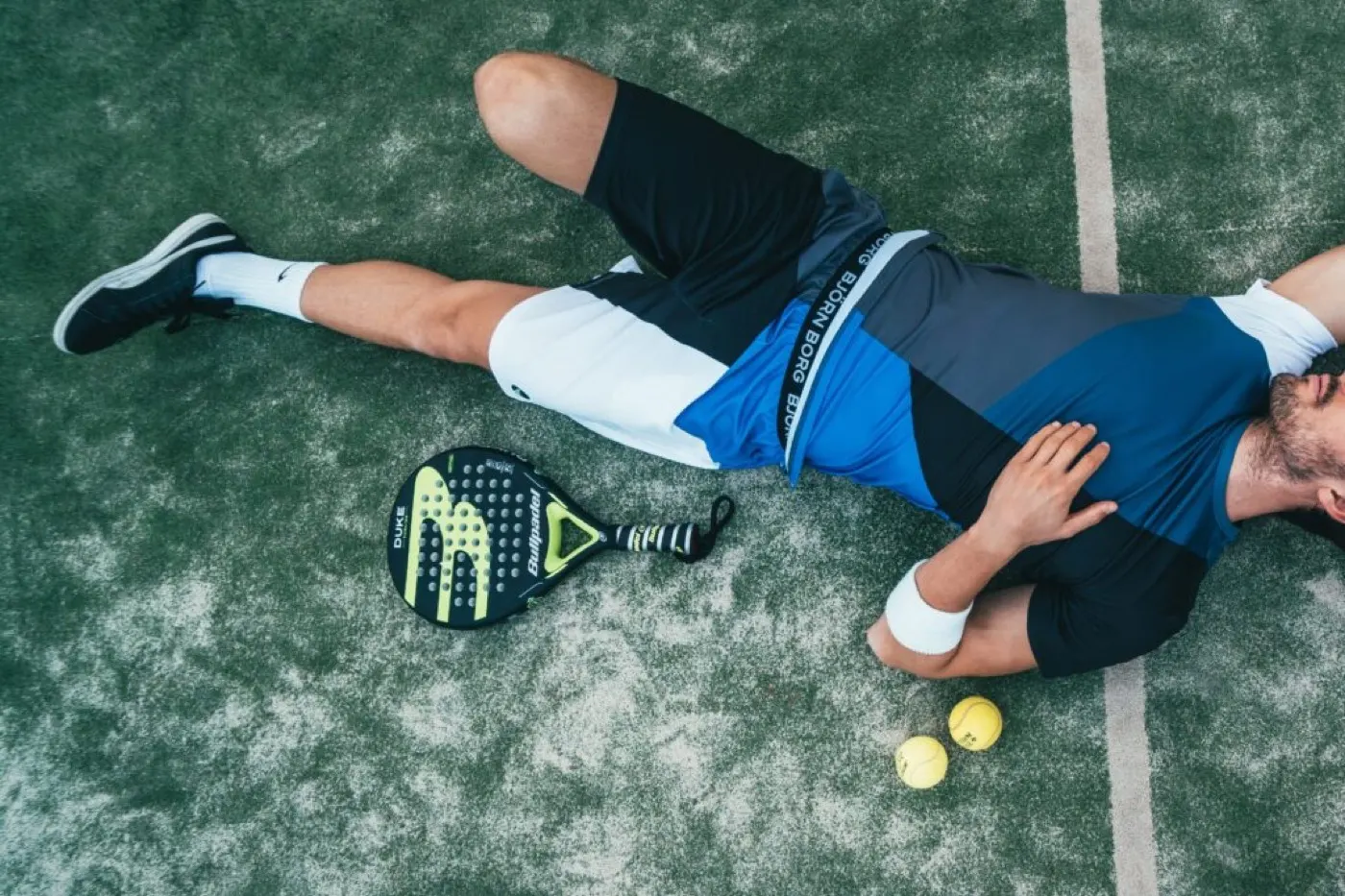
At the same time, even though it is a "fun" sport for all ages and skill levels, padel can be regarded as a potentially "dangerous" sport when it comes to injuries. This is because, although it resembles tennis, it is played on a smaller court, which makes it faster and demands frequent changes of direction, turns, accelerations, decelerations, jumps and landings. It is easy to understand that if padel is played without the necessary preparation and caution, it can lead to a range of injury types.
How many injuries in padel?
It is difficult to determine the risk of injury for two main reasons. First, padel is a relatively young sport (except in South America and Spain), and there are therefore a limited number of studies looking at injuries in padel. Second, there is no consensus (agreement among professionals) on the definition of injury or the methods that should be used in research on padel injuries. As a result, it is difficult to compare the results from different studies. In general, with the limited literature available, it can be said that padel has an incidence that is equal to or slightly higher than tennis. That is, closer to 3 injuries per 1000 hours played, which corresponds to 8-9 injuries per 1000 matches. The proportion of players who experience at least one injury per season is between 50% and 87%. That is, you can expect at least half of players to sustain an injury during the season.
Higher level, more padel injuries?
Apparently not. Although the evidence is minimal, injury frequency in padel seems to decrease with increasing skill level, unlike other sports such as football, where injury risk increases with increasing speed and intensity. Why is that? This is probably because padel is a sport that can be played by (almost) anyone. At recreational level, we find people who are keen to play this fun sport but who are completely unprepared, untrained and have many risk factors for injury. A generally lower skill level probably also plays a role.
And what about injuries in younger and older padel players?
When it comes to age differences, muscle strains are more common in players over 35, while younger players are more prone to ligament injuries. Age is a risk factor for muscle strains, and this is probably due to a gradual reduction in joint range of motion with age and muscle imbalances that are typical of older players. Previous injuries are also a significant risk factor: older players are more likely to have had a previous injury.
Which types of injuries are common in padel?
Most injuries in padel occur because of load over time, or acutely. (read more about sports injuries ). Here are some of the most common injuries in padel:
Tennis elbow/lateral epicondylalgia
This is the most common injury and is located in the elbow. This overuse injury used to be called "tennis elbow"; more precisely, the injury is called lateral epicondylalgia. The injury is in the tendon tissue that runs on the outside of the elbow and is the result of overloading the tendon tissue without sufficient rest. Repeated microtrauma can cause the tendon to become thickened and tolerate less load than before. Typical symptoms are pain when using the elbow, for example when lifting or hitting. Keen beginners seem to be more affected by this injury. One factor may be that they have started a new sport that places a high load on the tissue compared with previous activities. Another hypothesis is that they are more likely to hit the backhand with the wrist in a more flexed position, which causes repeated microtrauma in the tendon. In addition, general technique, grip and equipment will matter.
Ankle sprain (rolled ankle)
An ankle injury most often occurs in connection with jumping, landing, stopping or changing direction. Most people roll their ankle inwards. This causes one or more ligaments to be overstretched or torn. You can sprain the inside of the foot, but as a rule it always happens on the outside. The injury most often causes swelling, discolouration, tenderness and pain. Ankle sprains account for about 20% of all sports injuries. When it comes to padel, the right shoes are the simplest way to reduce the risk of sprains.
Jumper's knee/patellar tendinopathy
It is a common cause of knee pain in both recreational players and elite athletes, because of repeated jumping, sideways movements, rapid stops and changes of direction. Patellar tendinopathy is more common in male athletes, and they have almost two to four times greater risk of developing patellar tendinopathy compared with women. Features of patellar tendinopathy include pain located at the lower part of the kneecap that is made worse by jumping, landing, changes of direction and turning.
Low back pain/lumbago
Pain in the lower back is very common in racket sports and padel. Back injuries are widespread among elite and junior players as well as among both male and female professional players. These injuries include the joints, muscles and discs of the spine. (read more about lumbago ). Padel involves movements in all directions when it comes to the back, upper body and lower body. These movements must be synchronised and are often explosive, alternating rapidly between lengthening/shortening of muscles and acceleration/deceleration, which requires a high degree of neuromuscular control, flexibility and coordination in the spine. Large forces act on the back during many movements in padel, but especially during the smash, particularly with "kick" (topspin), and any technical movement involving rotation, extension and side bending. The incidence of back pain and pain between the shoulder blades is higher than in tennis, which is probably because padel normally involves more shots above shoulder height.
Shoulder injury
The anatomical design of the shoulder makes it the joint in the body with the greatest mobility. This means that the balance between stability and mobility is important. This applies especially to a padel player, who often generates a lot of force in shots above shoulder and head height. These shots are mostly one-sided and over time place a large load on the important tendons (the rotator cuff) that surround the head of the humerus. Repeated movements over time are often a cause of pain. This can lead to overloading of the tendon tissue (microtrauma), as in the elbow, and in addition it can lead to injuries in other structures in the shoulder.
Calf muscle strain (tennis leg)
A calf muscle strain is a calf injury that occurs between two muscle groups in the back of the lower leg. More specifically, it is an injury to the connective tissue between the gastrocnemius muscle and the soleus muscle. But an isolated strain injury to the gastrocnemius muscle can also occur. It most often occurs after an explosive movement when the knee is rapidly extended during a jump or sprint. Tennis leg is more common in men over 40; the reason for this is probably the onset of a decline in strength and muscle size in the average man aged 40+. This injury is also called "tennis leg", but given the growing trend of padel players over 40, perhaps it is time to change the name to "padel leg"?
Padel is still a young sport worldwide and more research on injuries related to the sport will follow, but so far little is available. For now, we can conclude as follows:
To minimise the risk of injury in padel, it is important to focus on good technique, use of the right equipment and making sure the body is well prepared through proper training and warm-up. It is always easier to prevent injuries than to rehabilitate them.
Do you have an injury related to padel? Do you need help setting up a preventive training programme? Our practitioners can help you with both acute and overuse injuries in padel and other sports.
References
- Dahmen J, Emanuel KS, Fontanellas-Fes A, et al Incidence, prevalence and nature of injuries in padel: a systematic review. BMJ Open Sport & Exercise Medicine 2023; 9: e001607. doi: 10.1136/bmjsem-2023-001607
- Castillo-Lozano R, Casuso-Holgado MJ. Incidence of musculoskeletal sport injuries in a sample of male and female recreational paddle-tennis players. J Sports Med Phys Fitness. 2017 Jun;57(6):816-821.
- Epidemiology of injuries in professional and amateur spanish paddle players Garcia-fernandez P., Guodemar-perez J., Ruiz-Lopez M., Rodriguezlopez E.S., Garcia-Heras A., Hervas-perez J.P. (2019) Revista Internacional de Medicina y Ciencias de la Actividad Fisica y del Deporte, 19 (76), pp. 641-654.
- García–Fernández, P.; Guodemar–Pérez, J.; Ruiz-López, M.; Rodríguez-López, E.S.; GarcíaHeras, A.; Hervás–Pérez, J.P. (2019) Epidemiology of Injuries in Professional and Amateur Spanish Paddle Players. Revista Internacional de Medicina y Ciencias de la Actividad Física y el Deporte vol. 19 (76) pp. 641-654
- Dines JS, Bedi A, Williams PN, et al. Tennis injuries: epidemiology, pathophysiology, and treatment. J Am Acad Orthop Surg. 2015;23:181–9. https://doi. org/10.5435/jaaos-d-13-00148.
- Abrams GD, Renstrom PA, Safran MR. Epidemiology of musculoskeletal injury in the tennis player. Br J Sports Med. 2012;46:492–8.
- Bright JM, Fields KB, Draper R. Ultrasound Diagnosis of Calf Injuries. Sports Health. 2017 Jul/Aug;9(4):352-355.
- https://www.aspetar.com/journal/viewarticle.aspx?id=574
- https://skadefri.no/kroppsdeler/skadefri-ankel/overtrakk/