
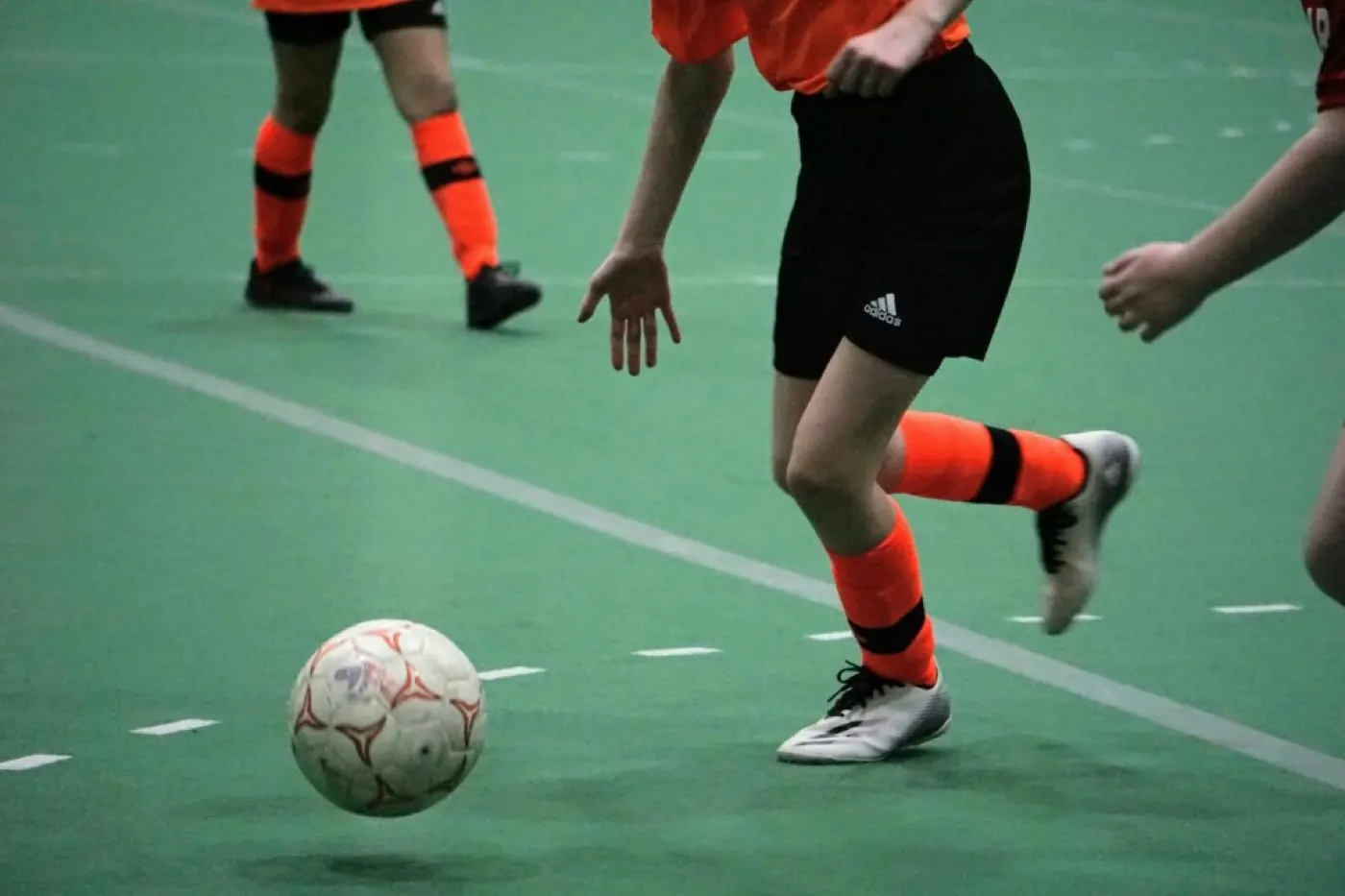
Schlatter's is often dismissed as a completely harmless complaint that everyone gets when they are young, but we often see the condition lead to major limitations in activity and sport. In addition, it often takes a very long time to get rid of the problems and we have no quick solutions. In this article we go through common questions about the condition and how to approach it.
What is Schlatter's?
Schlatter's is an irritation and inflammation of the growth plate at the top of the shinbone (tibia). The growth plate is found only in growing children and consists of cartilage for as long as it is open. This makes it more vulnerable than the surrounding bone, and among active children it is common for it to be overloaded. The condition typically arises at the age of 8-15, with boys typically a little later than girls, but with a higher incidence.
Schlatter's very rarely leads to lasting harm, and the vast majority get rid of the problems after a certain time. The condition is often called a self-limiting condition. By this we mean that the pain that occurs will naturally limit further overloading of the area. However, we often see that this does not hold true, for example among very keen children who end up training through too much pain. This most likely prolongs the duration of the problems and, in the worst case, increases the risk of more serious injury.
What are the symptoms and signs of Schlatter's?
Symptoms of Schlatter's are pain at the front of the knee that gets worse during activities such as running, jumping, kicking (football) and the like. There can also be pain after activity if the irritation is great enough, and it is not unusual to hear of pain when climbing stairs, squatting and the like. Typically there will also be swelling just below the knee, and a hard and painful bump can appear just below the knee.
What causes Schlatter's?
Schlatter's arises because of overloading of the growth zone at the top of the shinbone and is caused by the tendon of the thigh muscle at the front of the thigh pulling hard at its attachment point on the shinbone. Activities that lead to repetitive strong pulls can create irritation and inflammation in the growth plate and thereby Schlatter's. The child is potentially more susceptible with too much one-sided activity, and the onset of pain often coincides closely with a move to more training, a change of club team, or starting again after the summer holiday.
How is Schlatter's treated?
Schlatter's is treated by adapting the activity, both the amount and the type. Load management is an important concept and the aim is to reduce the irritation that has arisen and to avoid further overloading. Most often this means a period of less activity before trying to build up gradually again. Running with changes of direction, jumping, and kicking in football in particular are activities you should be a little careful with.
Can the child still do sport?
Yes, it is entirely possible to continue with sport even if you have Schlatter's. As long as the pain is not too severe, it is perfectly fine to continue with activity. A little pain along the way is fine, but it should not hurt so much that you start to limp or have to hold back. A lot of pain after activity is not desirable either. For many it will be necessary to adapt the content of training sessions, limit the number of sessions and, for example, adjust playing time in matches.
How long does it take to get better?
Schlatter's can take a long time; some are troubled for only weeks, while others have problems for up to 2 years or longer. Most have to live with the condition for many months and try to find a balance where they can be active and take part in sport without irritating it too much. It seems that everyone gets rid of the problems completely when the growth zone in the shinbone closes and turns to bone, but many are left with an extra lump below the knee that does not cause problems.
Are there other measures?
Adapting activity is the most important measure and no other measures will make up for this. Icing and painkillers are fine in individual cases where a lot of pain has been provoked, but should not be used as treatment or to be able to stay active. A Schlatter's strap seems to help some, but we lack documentation that this works.
Our practitioners have good experience with the diagnosis and treatment of Osgood-Schlatter syndrome. Book an appointment if you would like advice and guidance. In addition, we recommend the Skadefri site, which has a lot of good information about growth-related problems.