
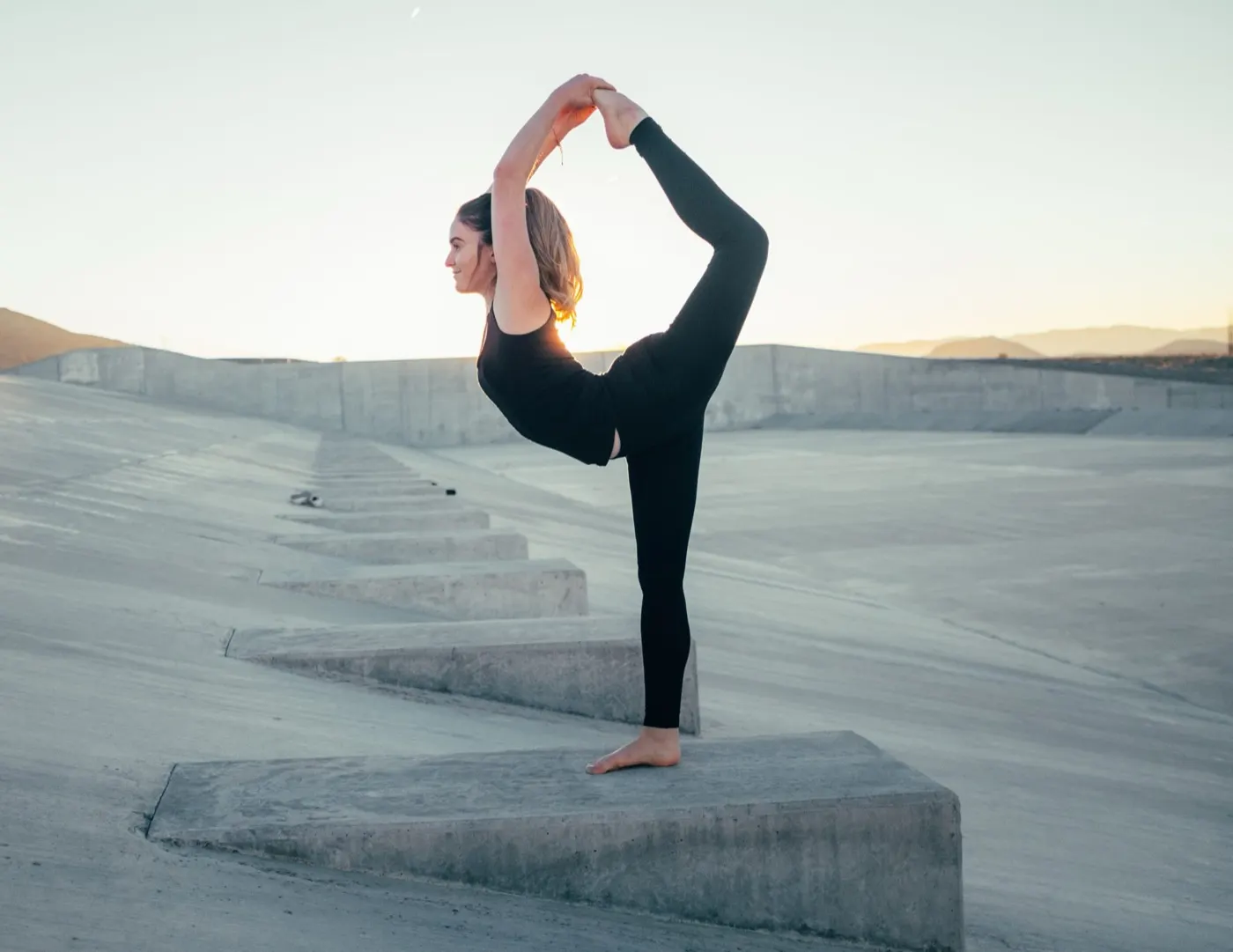
Balance training is one of the four recommended types of exercise, together with strength training, endurance training and mobility training (flexibility training) that should be done to improve and maintain health and physical skills.
Why train balance?
Good balance increases strength, improves posture and prevents and/or rehabilitates injuries. It has also been shown that training balance affects the brain so that we improve our ability to remember and concentrate. And not least, good balance reduces the risk of falls.
Every year about 640,000 people in the world die because of falls. This means that falls are the second largest cause of death in the accident category, with only road traffic accidents killing more people. The number of injuries resulting from falls is even higher. People over 65 have the highest risk of falling and should train balance three times a week or more. Good balance prevents falls and can therefore be both “life-extending” and injury-preventing. Many exercises that improve balance can be done anytime and anywhere and as often as you like, but the training must be suited to your fitness and balance level. Exercises that are too challenging can also increase the risk of falls.
Balance requires a high degree of coordination, and there are several signals from, among other things, muscles, joints and vision that must communicate and work well together. This is intense brain activity, and a lot of information has to be processed in a very short time. Balance training is therefore a good workout for the brain. Balance and other physical training affect our cognitive ability and can lead to improvements in both memory and spatial orientation.
What can you do yourself?
Test yourself! How long can you stand on one leg without support? Can you put on socks without sitting down? Can you walk in a straight line? Single-leg exercises can reveal any differences in balance and strength between the right and left leg. Often people do not know they have poor balance until they try to do balance exercises. Fortunately, the goal of better balance is not unattainable for most people; research shows that balance training for five to ten minutes two to three days a week can be sufficient. Balance training can, for example, consist of standing on one leg either on the floor or on a balance cushion, going for walks in forests and the countryside where the ground is uneven, or single-leg strength exercises. The possibilities are many!
Our physiotherapists, chiropractors and manual therapists can help you with balance training if you need it.
References:
- WHO on falls: https://www.who.int/en/news-room/fact-sheets/detail/falls
- American Heart Association on balance training: https://www.heart.org/en/healthy-living/fitness/fitness-basics/balance-exercise
- American Heart Association on recommendations for physical activity: https://www.heart.org/en/healthy-living/fitness/fitness-basics/aha-recs-for-physical-activity-in-adults
- Effects of balance training on dynamic postural stability in patiens with cronic ankle instability: systematic review and meta-analysis of randomized controlled trials. Jiang J. C, et al. The Journal of sports medisine and physical fitness, 2022.
- Effects of 8 weeks of balance training, virtuak reality training, and combined exercise on lower limb muscle strength, balance, and functional mobility among older men: a randomized controlled trial. Sadeghi H, et al. Sports health, 2021.
- Programme frequency, type, time and duration do not explain the effects of balance exercise in older adults: a systematic review with a meta-regression analysis. Farlie MK, Robins L, Haas R, Keating JL, Molloy E, HainesTP. BJSM 2018.
- Effects of balance training on post-sprained ankle joint instability. Faizullin I, Faizullina E. Int J Risk Saf Med 2015
- Effect of balance training on postural stability in subjects with chronic ankle instability.Wortmann MA, Docherty CL. J Sport Rehabil 2013
- Balance training improves memory and spatial cognition in healthy adults. Rogge. A, et al. Sci Rep, 2017
- Different types of physical exercise in brain activity of older adults: a systematic review. Ferreira S.A. et al. Experimental Gerontology, 2022.
- Injury prevention programs that include balance training exercises reduce ankle injury among soccer players: a systematic review. A Al Attar WS, et al. Journal of Physiotherapy, 2022.
- Berg Balance Scale. https://www.legeforeningen.no/contentassets/b7539588e1584412b954c3f43289dbb9/bergs-balanseskala-bbs.pdf